 DUCIMUS
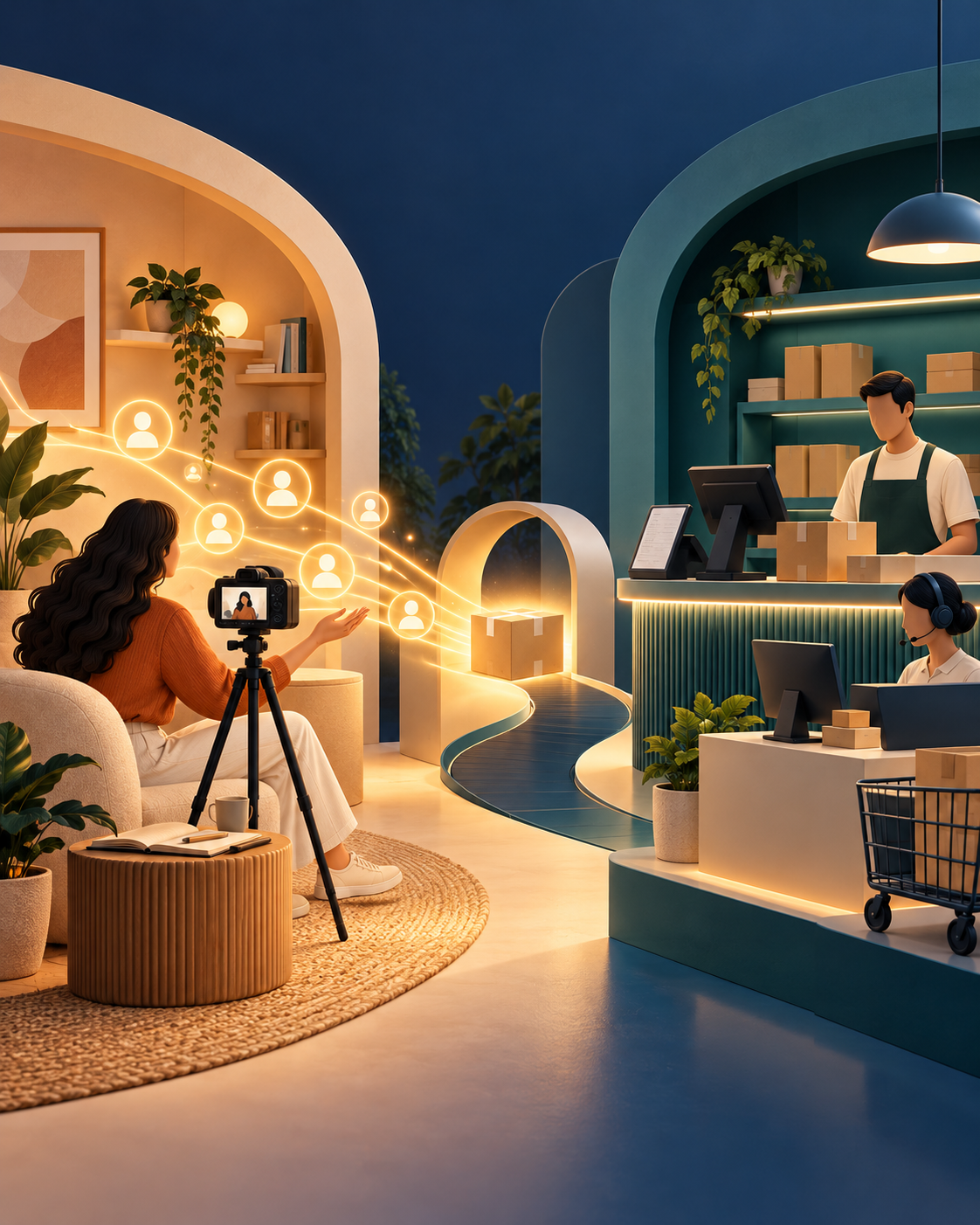
A creator can do the hardest part of a sale: earn attention, explain the product, build trust and make the audience want to act. That influence is real. It is also different from owning the checkout.
YouTube Shopping makes the boundary unusually visible. Eligible creators can tag products in videos, Shorts and live streams. A viewer can inspect the product while continuing to watch, then complete the purchase on the retailer's website. For affiliate products, YouTube says the retailer determines the final price, fees and taxes and handles payment, fulfillment, delivery, returns, refunds and support.
The creator may have made the sale possible. The retailer still owns the transactional moment.
One sale, three kinds of control
The first layer is discovery and trust. The creator selects the product, explains why it matters and gives the viewer a reason to pay attention. The content can move a person from awareness to intent. That is creative and commercial value even when it never appears as a row in a customer database.
The second layer is the platform interface. YouTube decides which channels and products are eligible, where tagged products appear, what analytics are available and how affiliate activity is tracked. It can make shopping feel native to the viewing experience even when checkout ultimately happens elsewhere.
The third layer is the merchant transaction. For products from other brands, YouTube's current help documentation says the retailer's terms and privacy policy govern activity on the retailer website. The retailer sets the final price and applicable charges, receives payment and manages the order.
Those layers cooperate, but they do not transfer into one another. A creator's influence does not automatically create access to the purchaser's identity. A platform analytics view does not become a portable customer list. A commission does not mean the creator owns the payment rail.
The connected-store variation
The boundary changes when a creator connects their own store, but it does not disappear. YouTube explains that a viewer who clicks a product from a connected shop is sent to the creator's official website in an in-app browser to browse and purchase. The creator or retailer remains responsible for the store, including products, procurement, fulfillment and shipping.
That arrangement can move the checkout onto infrastructure the creator controls or has chosen. It may also give the creator a more direct customer relationship, depending on the store platform, its terms, the creator's privacy practices and the information the buyer agrees to provide.
Yet YouTube still controls discovery surfaces, eligibility, tagged-product placement and engagement reporting inside YouTube. The store controls checkout. The creator controls whichever parts of the store relationship the actual commerce setup grants.
This is why saying “I sell through YouTube” is too broad to describe the business. The useful question is: which party controls each handoff?
DucimusAI's perspective: attribution is not ownership
YouTube's system can attribute a sale to tagged content and calculate an affiliate commission. Attribution is valuable because it helps the creator get paid for influence that might otherwise be invisible.
But attribution is not the same as owning the transaction. It proves that the system recognized a conversion under its rules. The retailer may still own the checkout experience and customer relationship. YouTube may still own the discovery interface, tracking logic and eligibility rules. The creator may receive a commission without receiving the buyer's contact information or the ability to serve that buyer independently.
There is a reasonable alternative interpretation: creators do not need to own every layer. Many would rather focus on content while merchants handle inventory, tax, shipping and support. That division of labor can be efficient and fair.
The risk begins when efficiency is mistaken for ownership. A creator who believes an affiliate dashboard is a customer base may plan the business around access that cannot be exported, contacted or carried elsewhere. A creator who knows the boundary can value the channel accurately and decide whether to add a direct commerce layer.
The Checkout-Control Map
Before forecasting creator-commerce revenue, map one real purchase from beginning to end.
Discovery: Where did the buyer first see the product? Who controls that recommendation surface?
Trust: What creative work moved the buyer toward action? Which source files, claims and permissions does the creator control?
Checkout: Whose website or app collects the order? Who sets the price, taxes, fees and payment methods?
Customer relationship: Who receives the buyer's information? What consent exists for future contact? Can the creator export anything useful?
Fulfillment and support: Who ships, refunds and answers complaints?
Earnings: Is the creator receiving store revenue, an affiliate commission, a platform reward or some combination? What conditions can reverse or delay it?
Return path: After the purchase, what brings the buyer back—to the creator, the retailer or the platform?
Write the answers beside the current source and date checked. Do not fill an unknown with an assumption.
A specific creator decision
Choose one product you regularly recommend and trace its actual handoff. Open the tagged product as a viewer would. Note the domain that receives checkout, the name shown on the payment statement if known, the party named in the return policy and the analytics the creator can actually export.
Then decide which business you are building.
If the goal is low-overhead affiliate income, the retailer-owned checkout may be exactly right. Measure commissions and dependency honestly.
If the goal is a durable customer relationship, connect an eligible store or create a direct path where the creator controls the offer, consent and follow-up—without pretending that a platform tag transfers ownership of the audience.
The creator can make the sale without owning the checkout. That is not a contradiction. It is the architecture.
The decision is whether to rent that architecture knowingly or add a layer the creator can carry.